
Why Am I Not Getting Pregnant If My App Says I’m Ovulating?
If you’ve been timing intimacy based on your period app and still getting negative pregnancy tests, I want you to know this first: you are not behind, and you are not doing anything wrong.
A lot of women assume that if an app says they’re ovulating, that must mean the timing is correct. But most period tracker apps are making an educated guess, not giving you a true picture of your fertility. When your body is even a little different from the average cycle, that guess can miss the mark.
Your body is not a calendar.
Ovulation is a real biological event, and it can shift from month to month based on stress, illness, travel, sleep changes, and other small but meaningful changes in your cycle and life.
The Flaw of the Calendar Method: Why Your App Is Guessing
You deserve more than a prediction!
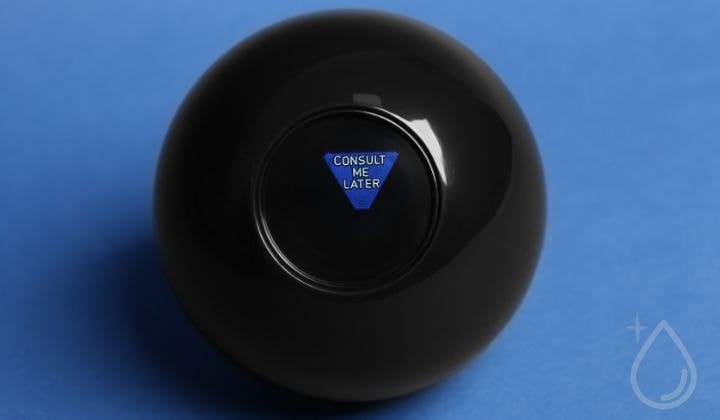
You shouldn't feel like you are consulting a magic 8 ball every cycle.
You shouldn't have feelings of despair and failure every time your period comes, because some app wrongly told you everything was perfect and it still didn't work!
In addition, your app can be wrong and your body can still be working exactly as it should. The issue is not that your body is failing. The issue is that the app is estimating something it cannot actually measure.
The Difference Between an Algorithm and Real Biology
How to Move from App Guesswork to Body Facts
The First Clue: What CM Tells You
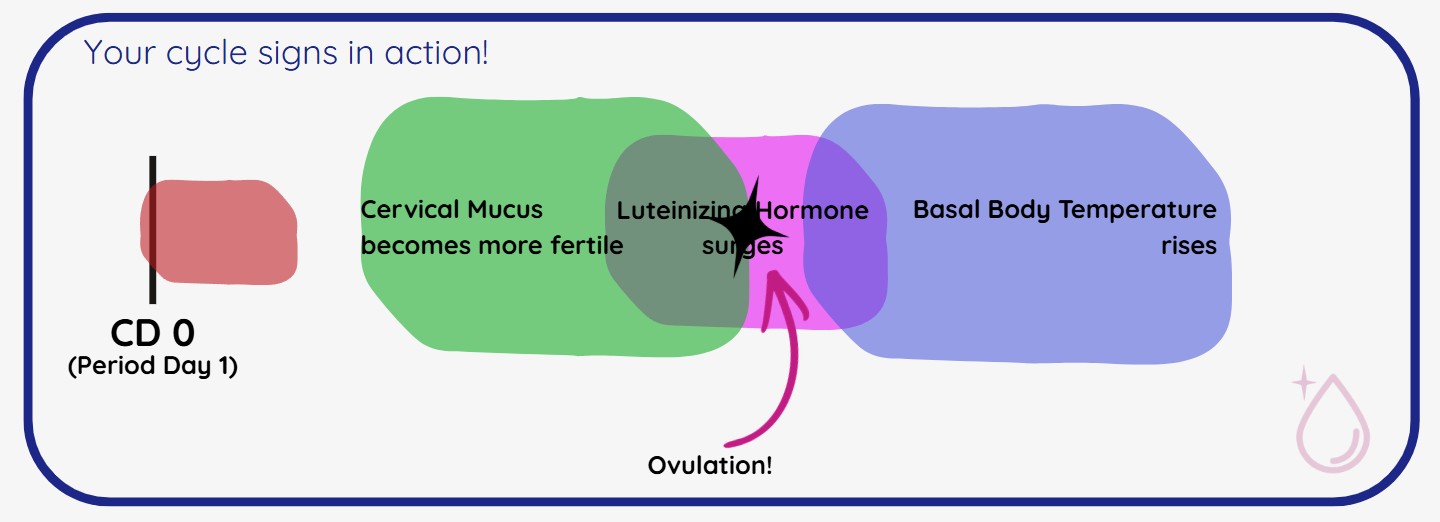
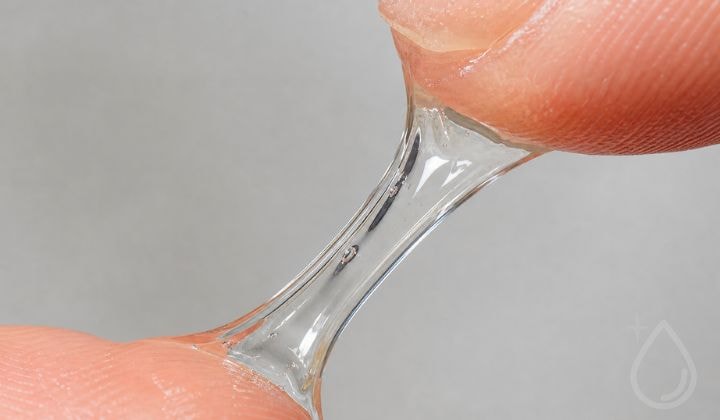
Cervical mucus, or CM, is one of the first signs that your body is in a fertile phase. As estrogen rises, CM often becomes more noticeable, more slippery, and more stretchy, which helps sperm survive and move more easily.
Think of CM as an early signal that your body is preparing for ovulation. It does not confirm that ovulation has happened yet, but it can help you recognize that your fertile window is opening and underway!
A lot of women miss this sign at first because they are not used to checking for it. That is okay!
Learning to notice CM is part of learning your cycle language, and it gets easier with practice.
The End of the Race? What LH Tells You
LH strips measure the luteinizing hormone surge in urine. That surge is one of the body’s main signals that ovulation is being attempted.
Think of an LH strip as a warning light. It tells you your body has been gearing up to release an egg, but it does not prove that ovulation has actually happened. It may have already happened, or maybe it won't be successful from this surge!
That’s an important distinction, especially if you want to get more accurate about timing.
Check out the LH Surge Masterclass when you are ready to learn more.
The Finish Line: What BBT Confirms
Basal body temperature, or BBT, helps confirm ovulation after the fact. When you take your temperature first thing in the morning and see a sustained rise, that usually means progesterone increased after ovulation.

Step One: Learn the Language of Your Cycle
Before you can confidently chart your cycle, you need to understand the terms and signals you’re seeing.
In the end, LH and CM help you predict, and BBT helps you confirm. Together, they give you a much clearer picture than an app ever can on its own.
That’s why the first step is not perfection.It’s education.
When you know what the signs mean, you can stop second-guessing yourself and start making sense of your own body with more clarity and confidence.
If you’re just starting out, or if charting feels confusing right now, that’s okay.
You do not need to master every part of your cycle today. You just need to give yourself time to understand the next signal in front of you. Help is always available.